
Lineage and background
Sensi Seeds says it has maintained its Hindu Kush since the 1980s by selecting and inbreeding within the line, without bringing in another variety. That makes its release a preserved regional gene pool with no named commercial parents.
The word landrace describes a population shaped in one region over many generations. A seed company’s selected line and an unselected regional population can both be called Hindu Kush and still differ, so it is fair to ask a producer which one they grow.
The name runs all through modern Kush breeding. One of the competing origin stories for OG Kush names Hindu Kush, and several crosses in this library list it as a parent. A shared word on a label still does not prove that a jar holds an unmixed landrace selection.
Sensi calls the variety stable and uniform after generations of selection, and says it crossed Hindu Kush with Skunk #1 to make Skunk Kush.
Appearance
Sensi Seeds describes a compact plant with short, strong branches and dark green, wide-fingered leaves. The grower in its report saw narrower leaves than expected, hard buds, many orange hairs and a silvery white layer of trichomes. A purple tint or a heavy resin coat says nothing reliable about where a plant came from or how strong it is.
Aroma and flavor
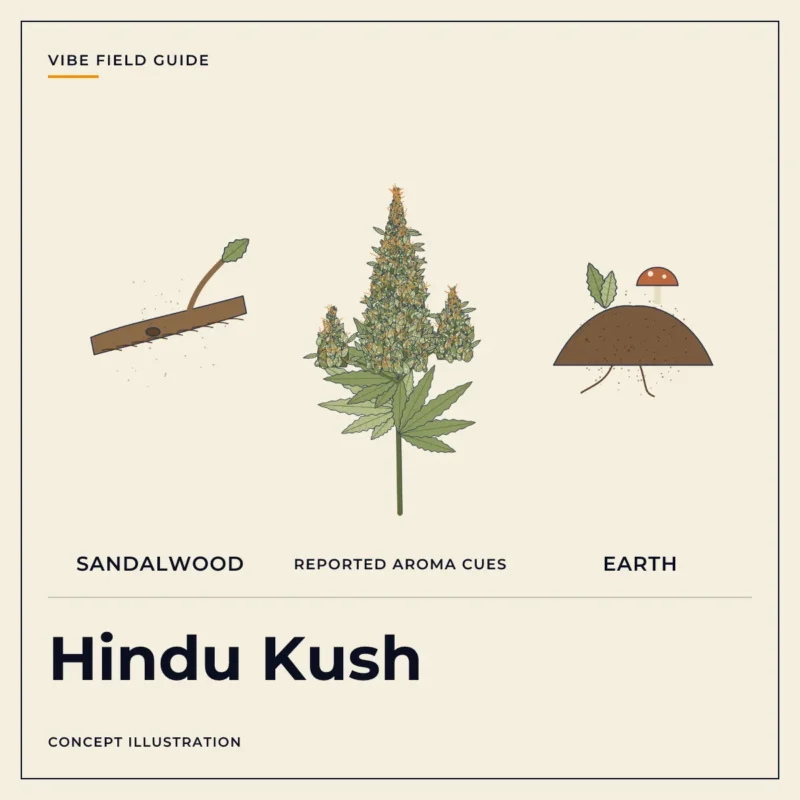
The breeder singles out sandalwood and aniseed in its preserved line. Other descriptions add earth, pine and a mild sweetness. Expect some spread between selections and harvests.
The scent changes as the plant matures. Sensi describes a sweet smell early in flowering that turns spicier and more pungent, close to hashish, as the buds ripen. Its flavor notes keep to aniseed and sandalwood. A grower in the breeder’s own report described earthy, woody and sweet notes but did not pick out aniseed in the dried buds.
Reported effects
Breeder and consumer descriptions tend to focus on a settled body feeling and relaxation, and some people report a heavier experience than expected. An old origin does not make a line weak, so compare the measured cannabinoids on the package with products you already know. Effects vary from person to person. These are reported experiences, not medical claims. Cannabis affects people differently, so start low and go slow, and talk to a doctor if you have medical questions.
Terpenes and potency
The breeder’s notes describe aroma without a terpene panel, and a sandalwood or aniseed comparison cannot tell you which compound leads. THC varies by selection, grower and harvest. Read the product label for the product you are buying, and keep in mind that one producer’s flower certificate does not describe another producer’s concentrate.
Seed and grower notes
The breeder publishes a 45 to 50 day flowering time with medium yields and resistance to mold. Two feminized plants in its grow report were harvested after 54 days. For outdoor growing Sensi recommends a warm, sunny climate with a long summer. The line is sold in feminized, regular and automatic versions.
Reported family
These ties come from reported or documented lineage accounts. They are not genetic test results.
Reported as bred from Hindu Kush
- Mango Kush: reported as Mango x Hindu Kush.
- Purple Kush: one reported version is Hindu Kush x Purple Afghani.
- Hindu Zkittlez: reported as Hindu Kush x Zkittlez.
- Hindu GDP: reported as Pre-2000 Sensi Hindu Kush x GDP Glue.
- Granddaddy Hindu: reported as Granddaddy Purple x Pre-2000 Sensi Hindu Kush.
Also named in reported lineages
- Sour Hindu: listed as Sour Diesel x Pre-2000 Sensi Hindu Kush.
- OG Kush: one competing origin account names Hindu Kush.
Other reported connections
- Master Kush: described with Hindu Kush-region ancestry.
- Afghan Kush: its reported background names Hindu Kush.
- Violator Kush: its reported background names Hindu Kush.
See Hindu Kush on the strain family map
Similar aroma
- Bac Fang Wolverine F2: also described with pine and earthy notes.
- Bubba Kush: also described with pine and earthy notes.
- Cobra Kush: also described with pine and earthy notes.
- Fight Club: also described with pine and earthy notes.
- Forbidden Fruit: also described with pine and earthy notes.
- Grape Pie: also described with pine and earthy notes.
Similar aroma means people describe these strains with some of the same words. It does not mean they share genetics or feel the same.
Finding Hindu Kush at Vibe Cannabis
When you find a listing, look at who produced it and whether it is sold as a landrace selection or as a cross, then match the batch to the product label.
To check current availability, choose your Vibe store and search its menu for Hindu Kush. Store menus change. See current offers.
For adults 21 and over. Do not drive after using cannabis.
Questions about Hindu Kush
Is Hindu Kush indica or sativa?
Hindu Kush is an indica named for the mountain range where the population developed. Sensi Seeds describes its preserved selection as 100% indica and says it has never been hybridized.
What is Hindu Kush a cross of?
It is a regional line with no named parent pair. Sensi Seeds describes preserving and selecting within its own Hindu Kush gene pool since the 1980s, without bringing in another variety.
What does Hindu Kush smell like?
The breeder describes sandalwood, aniseed and pine with a sweet, earthy base. It says the sweet smell of early flowering becomes spicier and more like hashish as the plant ripens.
What does Hindu Kush taste like?
Sensi Seeds gives aniseed and sandalwood as the flavor of its line and calls the sandalwood character unique. Flower from a different selection may not share that taste, so ask about the producer’s plant.
How long does Hindu Kush take to flower?
Sensi Seeds publishes 45 to 50 days for its line. In the breeder’s own grow report, two feminized plants were cut after 54 days, with the grower saying they could have come down earlier.
Is every Hindu Kush a landrace?
No. A regional population and a seed company’s selected line can both carry the name, and modern crosses borrow the words too. Check whether the producer describes its flower as a landrace selection or a hybrid.