
Lineage and background
Breeder and nursery accounts agree on the California Orange and Skunk background. Some references name Skunk #1 specifically, and others say Skunk hybrid or Crockett’s selection, so the more specific wording should follow the source for a given cut or seed release.
One seed company describes Tangie as a reworking of a citrus profile associated with an earlier Tangerine Dream. That comparison doesn’t make a Tangerine Dream product the same cultivar, so check the listed parents when names look alike.
You may also see it as Crockett’s Tangie. The name turns up inside other cultivar names too, such as Sour Tangie, and each of those crosses has its own pedigree. Tropicanna Cookies and Citrus Sap are among the library strains reported to use Tangie in their breeding. If you’re replacing a familiar purchase, confirm the new listing is Tangie itself.
One preservation nursery says it received its Tangie clone from a grower who had shared the plant with Crockett, and that Crockett confirmed it as authentic. That account explains why some clones are offered as the Crockett cut.
Appearance
Published descriptions commonly show green flower with orange hairs and resin coverage. Those traits aren’t unique to Tangie and won’t identify it on their own.
Aroma and flavor
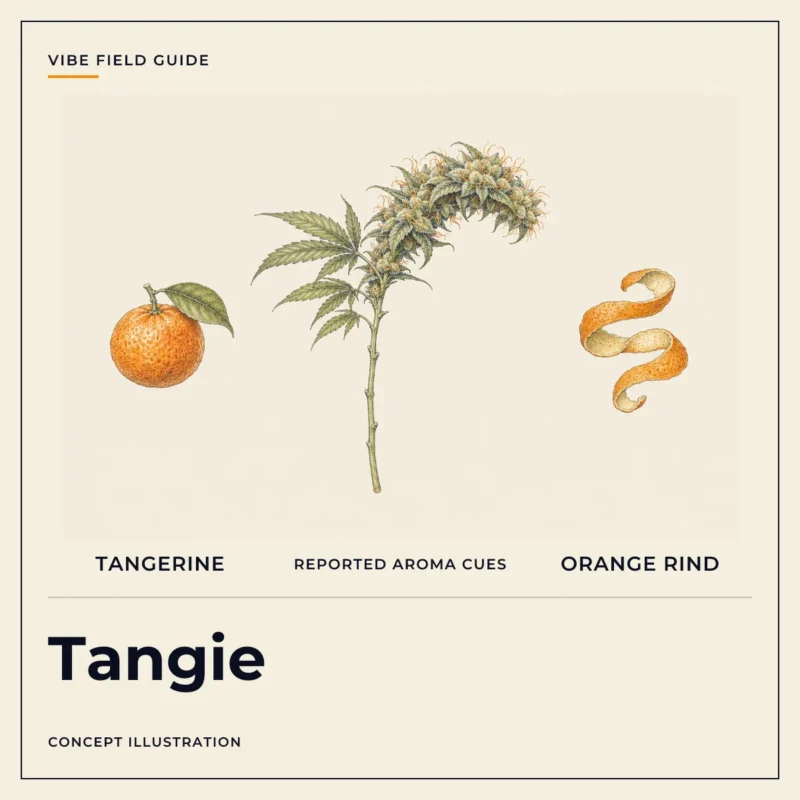
On the nose, tangerine is the most consistent note across breeder, nursery and consumer descriptions. Orange rind and citrus oil come up often, with sweet fruit giving way to earth or a skunky edge, and some accounts mention a sharper, slightly bitter peel.
That orange emphasis sets it apart from a plain lemon profile, so tell the budtender whether you’re after sweet orange, tart peel or a more earthy finish.
The taste is reported a little differently from the smell. One seed company’s description has sweet, tangy citrus first, followed by tropical fruit and a subtle earthiness, with sweetness and earth shifting from one phenotype to another.
Reported effects
People commonly report feeling uplifted, happy or creative. Some describe energy or a more talkative mood, and others notice relaxation alongside the mental effects. These impressions can’t predict performance or concentration, and the sativa-leaning label is no promise you’ll stay alert; a bright-smelling batch can still feel stronger than expected. Effects vary from person to person. These are reported experiences, not medical claims. Cannabis affects people differently, so start low and go slow, and talk to a doctor if you have medical questions. Do not drive after using cannabis.
Terpenes and potency
Myrcene appears prominently in published Tangie summaries. A breeder description names caryophyllene and pinene, and other aggregated records show terpinolene, so one fixed top-three list doesn’t fit. An orange smell alone doesn’t prove limonene leads; ask for measured terpene results if you want to compare a new batch with one you liked.
Strength differs from one grower and harvest to the next. Check the product label for THC and any other listed cannabinoids instead of a catalog range or a past purchase.
Seed and grower notes
The same seed company gives a flowering period of 9 to 10 weeks and an outdoor harvest between late September and early October. It describes a plant that tends to grow tall and often needs training.
Reported family
These ties come from reported or documented lineage accounts. They are not genetic test results.
Reported parents
- California Orange: documented parent.
Reported as bred from Tangie
- Sour Tangie: lists Tangie as a parent.
- Citrus Sap: reported to use Tangie in its breeding.
- Forbidden Fruit: lists Tangie as a parent.
- Clementine: commonly reported as Tangie x Lemon Skunk.
- Tangilope: DNA Genetics cross of Tangie and Chocolope.
Also named in reported lineages
- Skunk #1: Skunk parent named in some references.
Other reported connections
- Tropicanna Cookies: reported to use Tangie in its breeding.
- Mango Tango: its reported background names Tangie.
- Orange Hill Special: also names California Orange in its reported background.
See Tangie on the strain family map
Similar aroma
- AK-47: also described with skunk and earthy notes.
- Headstash: also described with skunk and earthy notes.
- Sunset Sherbet: also described with skunk and earthy notes.
- Super Silver Haze: also described with skunk and earthy notes.
- Platinum Gelato: also described with skunk and earthy notes.
- G13 Haze: also described with skunk and earthy notes.
Similar aroma means people describe these strains with some of the same words. It does not mean they share genetics or feel the same.
Finding Tangie at Vibe Cannabis
To check current availability, choose your Vibe store and search its menu for Tangie. Store menus change. See current offers. Check the product label for the producer, batch and test results.
For adults 21 and over.
Questions about Tangie
Is Tangie indica or sativa?
Tangie is generally classified as a sativa-dominant hybrid, and some menus shorten that to sativa. The label describes its breeding background and gives no assurance of how a given jar will feel.
Who developed Tangie?
Crockett Family Farms gets the development credit, and a seed company helped distribute it. Breeder and nursery accounts support California Orange x Skunk ancestry, which is also why the name Crockett’s Tangie is used.
What does Tangie taste like compared with how it smells?
Tangerine and orange rind lead the reported smell, with earth or skunk behind them. One published flavor description starts with sweet, tangy citrus and moves to tropical fruit and a subtle earthy finish.
Does Tangie’s orange aroma mean limonene is its main terpene?
No fixed ranking follows from the aroma. Published Tangie profiles put myrcene forward and also name caryophyllene, pinene and terpinolene, so the batch report is the place to see which terpene leads.
Which Skunk is in Tangie?
Sources use different wording. Some name Skunk #1, while others say only Skunk, a Skunk hybrid or Crockett’s selection. California Orange on the other side of the cross is stated consistently.
How long does Tangie take to flower?
A seed company that works with the line gives 9 to 10 weeks of flowering and an outdoor harvest from late September to early October. Its notes also mention a tendency to grow tall.